How to do market research
You don't need a paid research suite to know if people want what you sell. The free tools already hold the signal.
But a tool is only as good as the question you bring it. So frame the question first, then sweep, then confirm the real numbers. AI can run the sweep; you make the call.
First, frame one question
Before you open a tool, write the single decision this research must settle, for example: "Is there enough repeat demand for beeswax food wraps in the US to be worth stocking?"
A sharp question keeps the sweep from wandering. Everything below is evidence for or against that one call.
Fastest path: one prompt, end to end
🤖 AI prompt — paste into ChatGPT / Claude
You are a market research analyst. Use real data only, from tools you open.
Product idea: [e.g. reusable beeswax food wraps]
Country/market: [e.g. US]
Rough price I'd sell at: [$]

Do this:
1. Open Google Trends (trends.google.com) and read the last 5 years for my product term: is interest rising, flat, or fading? Give the direction and the numbers you saw.
2. Open the relevant marketplace bestseller list (Amazon Best Sellers, Etsy, or the category on my target platform) and list the top 5 competing products with their visible review counts as a demand proxy.
3. Open a free keyword tool (ahrefs.com/keyword-generator) and read the real monthly search volume for my term and 3 related ones; flag which are commercial ('best', 'buy') vs informational.
4. Check 2 to 3 communities (Reddit, a niche forum, a Facebook group) for how often people ask about or recommend this, and quote 2 real phrases they use.
5. Do a rough market-size sanity check: buyers x price x purchase frequency, stating every assumption.
If you can't browse, leave that item blank and tell me which free tool to open.
Do not guess or estimate any number. Every figure must come from a tool you opened; if you can't get a real one, list it and ask me.
Output: the one demand verdict, then direction + top competitors + real search volumes + community signal + rough market size, each with its source.
Or do it yourself in 4 steps
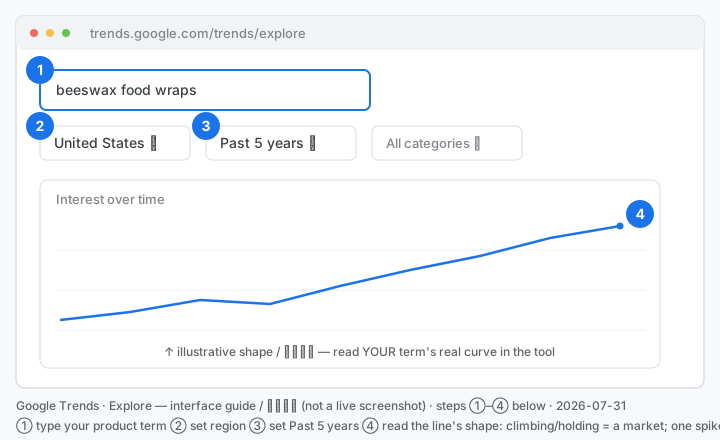
- Read the trend line first. In Google Trends, enter your product term, set region and a 5-year window, then read the shape. Climbing or holding is a market; one spike then a drop is a fad.
- Use bestseller lists as a demand meter. Amazon Best Sellers, Etsy's popular listings, or your platform's category page rank by what actually sells. Count reviews on the top 5. High review counts mean real repeat demand, not just listings.
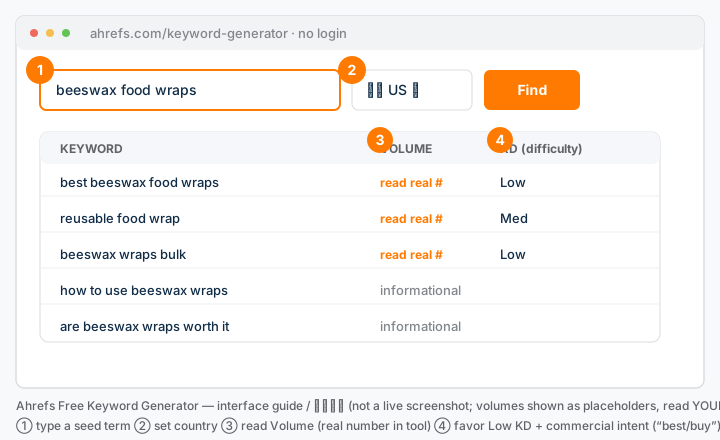
- Read real search volume. In Ahrefs' free Keyword Generator (no login), type your term, set the country, and read the monthly volume. Favor commercial terms ('best', 'buy') over big informational ones. For the keyword tactics themselves, see the keyword-research note.
- Listen in communities, then size it. Search Reddit and niche forums for "where do I buy X?" and complaints, save the exact words for your copy, then multiply a plausible buyer count by price and purchase frequency. You want a market big enough to bother with, small enough to win a slice of.
Worked example (labeled): beeswax food wraps, US.
Trends shows a gentle 5-year climb, not a spike. Amazon's top 5 wraps carry 2,000 to 8,000 reviews each, so repeat demand is strong. And r/ZeroWaste has recurring "best reusable wrap?" threads.
Rough size: 3M eco-minded households x $18 x 1.5 packs/year, about $80M. Big enough to enter, too big to own, so you pick a niche angle. Numbers are illustrative; confirm each in the real tool.
Go faster with a paid tool (optional)
Selling DTC and want to see what competitors actually run? A paid tool like TrendTrack shows their live ads, best-selling products, and store traffic in one place.
It's an accelerator, not a requirement. Do the free sweep first; add it only for competitor ad and product intel the free tools can't show. Its ad-spend data is limited to the EU and UK. See the research-tools note for the full picker.
Answer your one question before you spend a dollar. Let AI gather; you confirm every figure against the live tool.